Add Row
Add Element
cropper
update
The Wellness Living Hub
update
Add Element
  • Home
  • Categories
    • Financial Wellness
    • Health & Wellness
    • Travel
    • Lifestyle
    • Pet Wellness
    • Real Estate
    • NJ News
    • News
October 10.2025
2 Minutes Read

New Jersey's Governor Race: Candidates Clash Over Affordability and Personal Attacks

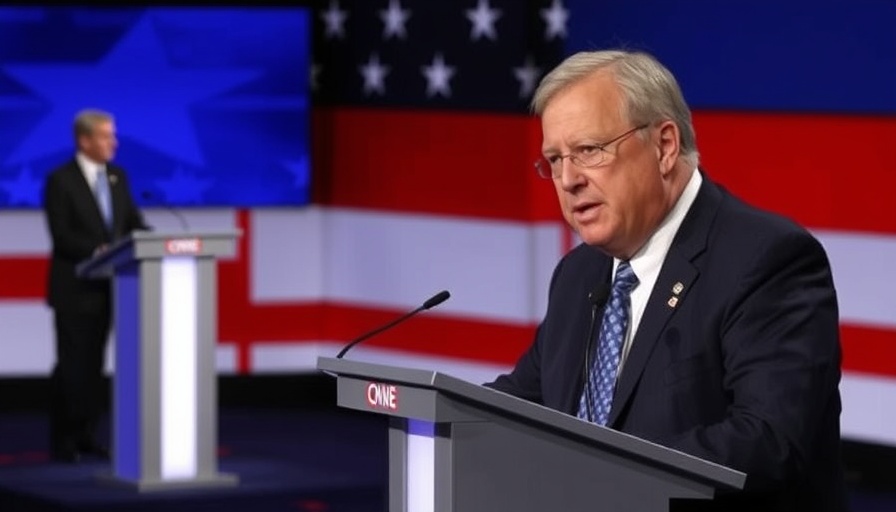
Final debate in NJ governor’s race gets heated and personal

New Jersey's Governor Race Heats Up: A Focus on Affordability

The final debate between Democratic candidate Mikie Sherrill and Republican contender Jack Ciattarelli showcased an intense focus on affordability, a pressing concern for voters as the November 4 election approaches. With the state of New Jersey grappling with high costs and a competitive political climate, the candidates turned personal and vitriolic, unleashing pointed attacks that resonated with audiences across the state.

The Candidates' Positions

At the debate held at the New Brunswick Performing Arts Center, candidates presented starkly contrasting visions. Sherrill, a U.S. Representative since 2017, highlighted her commitment to tackling soaring costs, emphasizing plans to declare a state of emergency on energy pricing. "I’m laser focused on driving down your costs and making New Jersey more affordable," she asserted. In contrast, Ciattarelli, who served in the state assembly, lamented an "overdevelopment crisis" that exacerbates property tax burdens and criticized the approach to policing and education under current policies.

Personal Attacks and Controversial Claims

The debate escalated as both candidates aired grievances against each other’s past actions. Sherrill challenged Ciattarelli over his history in medical publishing, accusing him of profiting from misinformation related to opioid safety, a claim that sparked outrage and defensive rebuttals. Ciattarelli fired back, questioning Sherrill's military record and the circumstances surrounding her departure from the Naval Academy. Such exchanges not only highlighted policy disagreements but also underscored the candidates’ willingness to engage in personal attacks as the campaign heats up.

The Trump Factor

President Donald Trump's shadow loomed large over the debate, with Ciattarelli grading him an A for his performance, while Sherrill failed him outright. This divide illustrates the polarized nature of the electoral landscape in New Jersey, where issues of governance and accountability are inextricably linked to national politics as certain segments of the electorate still largely support Trump's policies.

What's at Stake for Voters?

Residents across New Jersey are facing rising costs in housing, utility bills, and overall affordability—making the candidates' policies on these issues crucial. With both campaigns focusing heavily on these concerns, the debate amplified calls for accountability and innovative solutions. As voters weigh their options, the contrast in each candidate's platform will play a decisive role in shaping the future of New Jersey's governance.

Final Thoughts

As the election date draws near, the aggressive tone of personal attacks and focused messaging reveals a frantic effort from both candidates to connect with voters' immediate needs. How these issues play out in the electorate could very well hinge on New Jersey's response to the questions of affordability and competence in leadership during the crucial last month of campaigning.

NJ News

1 Views

0 Comments

Write A Comment

*
*
Please complete the captcha to submit your comment.
Related Posts All Posts
04.17.2026

Senator Zwicker Urges Ratepayer Relief and Educational Funding in NJ Budget

Update Senator Zwicker Advocates for Energy Affordability Amid Budget Concerns As New Jersey navigates a hefty $3 billion structural deficit, state lawmakers, led by Senator Andrew Zwicker (D-Mercer), emphasize the necessity for immediate action on energy affordability and educational funding. During recent Trenton budget hearings, Zwicker underscored the importance of upgrading New Jersey's aging power grid. “Our grid has been around for decades. We must adapt and incorporate new technology to enhance our energy transmission capacity,” he stated, advocating for modernization to alleviate financial pressures on ratepayers. Higher Education Funding: A Critical Examination In a climate where higher education is already precarious, Zwicker expressed urgent concerns regarding flat funding for public institutions and significant cuts impacting private colleges. “Without a long-term strategy, I really worry about where higher education is going in New Jersey,” he warned. With funding for community colleges facing a potential 30% cut due to healthcare costs alone, the implications for students and job retention in the state could be dire. A Call for Long-Term Strategic Planning Zwicker's message is clear: New Jersey must not only promote immediate relief but also forge a comprehensive plan that secures educational opportunities for future generations. By integrating budgetary considerations into a forward-thinking educational strategy, he believes the state can foster a vibrant workforce ready to meet local demands. The Role of State Officials While discussing potential solutions, Zwicker called on utility companies and government agencies to collaborate and find equitable methods to fund necessary upgrades without overburdening ratepayers. “Affordability is the primary concern; we need to find innovative solutions that don't place the financial strain on the residents,” he remarked. New Jersey residents should closely monitor these developments in both energy and education funding, as the decisions made in Trenton will have lasting impacts on their finances and opportunities.

04.16.2026

Understanding Newark Schools' Spending: A Defense Against Criticism

Update Analyzing Newark Schools' Financial Strategies Amidst Scrutiny The Newark Public Schools District, New Jersey's largest, is under intense scrutiny regarding the management of its finances. The criticism comes predominantly from Republican lawmakers questioning how over $287 million in COVID-19 relief funds has been utilized, especially in light of a recent $500 million lease deal for an elementary school. Superintendent Roger Leon stands firm in defending these spending choices, suggesting that they form part of a broader strategy to enhance educational infrastructure. COVID Funds in the Spotlight Discussions around the misuse of funds have intensified as concerns were raised regarding accountability and effectiveness. Lawmakers have even called for investigations into the district’s financial practices, which some say are emblematic of broader issues within educational funding nationwide. Leon counters these critiques by emphasizing that federal audits have recognized Newark's adherence to guidelines, pointing out that the district was commended during a federal review. This highlights a significant attempt to set the record straight amidst partisan alarm. Understanding the Tutoring Controversy One of the most contentious points raised was the number of students recommended for tutoring versus those who actually received it. Critics claim that only a fraction of the over 15,000 recommended students were served, stirring public discontent and doubts about resource allocation. However, Leon clarifies that the methods used to determine tutoring needs align with effective educational strategies backed by research, indicating a more nuanced picture is required to fully understand these figures. A Balancing Act The criticism of Newark's spending reflects a broader challenge faced by many school districts in navigating financial transparency while responding to diverse community needs. As Leon continues to defend his strategies, the ongoing dialogue illustrates the tension between fiscal governance and educational outcomes that is particularly relevant in today's political climate. The path forward will require not just defense but a proactive engagement with community stakeholders to reinforce trust. Given the shifting landscape of educational funding and policy, Newark's approach may serve as a case study worth following closely—as the lessons learned could resonate across the state.

04.15.2026

Exploring the Expansion of Lockheed Martin Contracts in New Jersey

Update Lockheed Martin's Growing Influence in New Jersey Lockheed Martin, a military contractor with strong ties to New Jersey, is making headlines with a recent $4.5 billion arms deal to supply the United Arab Emirates (UAE) with advanced missile defense systems. This deal not only underscores the company's expanding role in global defense but also highlights its significant presence in Moorestown, located just 15 miles from Philadelphia. As conflicts intensify in regions like Iran, the importance of such deals cannot be overstated. The Strategic Importance of the THAAD System At the heart of this deal is the Terminal High-Altitude Area Defense (THAAD) system, which serves as a critical defense mechanism against missile threats from adversaries such as Iran. This system is designed to intercept short, medium, and intermediate-range threats, making it an essential asset for U.S. allies like the UAE. The implications of such a sale not only bolster regional security but also demonstrate the U.S. commitment to its allies amidst ongoing geopolitical tensions. The Financial Backbone of the Deal: Lockheed Martin's Investments Lockheed Martin's ascendance can be attributed to substantial investments in its production capabilities. According to reports, the company has poured billions into its facilities and workforce since the Trump administration began prioritizing defense spending. Such strategic investments have positioned Lockheed to execute high-stakes contracts efficiently, addressing the increasing demand for advanced military technologies. Political Underpinnings of the Deal The approval process for arms sales like the one to the UAE often involves significant political processes, including Congressional notification. Lockheed Martin has been proactive in its lobbying efforts, spending millions to influence federal policies in its favor. This connection raises questions not only about corporate power in military decisions but also about the transparency of such transactions. Implications for Local Communities and Job Markets For New Jersey, this growth is significant not just for its economy but also for job creation in the area. The local community stands to benefit from the influx of contracts that Lockheed Martin is securing. With the company's substantial operations in Moorestown, the potential for new employment opportunities in both engineering and manufacturing industries is promising. Local residents keen on careers in tech and defense can find increasingly viable paths within Lockheed’s expanding workforce. Conclusion: The Future of Defense Contracts As Lockheed Martin continues to secure contracts amidst ongoing military conflicts, the implications for New Jersey, the nation, and international relations are profound. For local residents, this may mean not only job creation but also a growing commitment from the government toward military expenditure. Understanding these dynamics is essential as they shape not just local but global security landscapes.

Terms of Service

Privacy Policy

Core Modal Title

Sorry, no results found

You Might Find These Articles Interesting

T
Please Check Your Email
We Will Be Following Up Shortly
*
*
*